































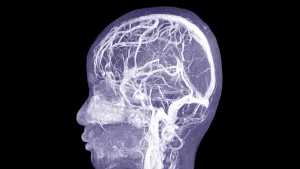












Dural Venous Sinus Thrombosis Thrombectomy
What is dural venous sinus thrombosis (DVST)?
The dural venous sinuses are large vein spaces in the brain that collect blood flow from the smaller veins of the brain, returning it to the heart via the internal jugular veins. For a variety of reasons having to do with an increased propensity for forming blood clots (hypercoagulability), clots may form in these large venous spaces and either narrow or totally block the flow of venous blood. There is a broad spectrum of severity, ranging from asymptomatic to severe neurologic deficits in the event of bleeding or swelling of the deep brain structures.
What are the symptoms of DVST?
Symptoms are often nonspecific, including headaches, nausea/vomiting, or more significant neurologic deficits as mentioned above.
How is DVST diagnosed?
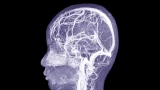
The diagnosis is typically made on a CT scan, with various characteristic signs seen on noncontrast head CT, CTA/CTV (CT angiography/venography) showing clot within the dural venous sinuses. Sometimes MRI/MRA/MRV is utilized in the same manner. Patients are evaluated for risk factors suggestive of hypercoagulability.
How is DVST treated?
Treatment is primarily medical. Patients are generally treated with blood thinning medications in order to limit the further formation of clots. In patients that continue to decline despite medical therapy, endovascular catheter treatments are available in the acute setting to attempt to restore venous blood flow. We use a variety of devices, including aspiration catheters and stents, in order to remove as much clot as possible. This may also involve leaving several catheters inside of the sinuses for a day or longer, infusing a clot busting medication in an attempt to restore blood flow.